Strain Report: OG Kush Terpenes, History and the Cuts That Built the West Coast
Audio unavailable right now. Please read on below.
Key takeaways
OG Kush came to Los Angeles in 1996 as one surviving cutting from Florida. By the end of the decade it was the most valuable strain in Southern California, selling for as much as $8,000 a pound, and most of the West Coast's gas runs back to it. Ask ten growers where it came from and you'll get ten answers. Ask what it smells like and they'll all say the same thing: fuel, pine, lemon and earth.
For lab operators, OG Kush is the gas profile everybody knows. Below is how it got to LA, how the cuts spread, what goes into our blend, and how it holds up in a cart.
Strain Profile: OG Kush
OG Kush smells like a gas station in a pine forest. Fuel up front, then lemon peel, then pine and damp earth underneath, with black pepper on the exhale. The nose is loud. It's a hybrid that leans relaxing, with a heady lift at the start that settles into the body.
Flower commonly tests in the high teens to mid twenties for THC, heavily depending on the cut you are growing.

How OG Kush Got to Los Angeles
The story people tell most starts in Florida in the early 1990s. Matt "Bubba" Berger was growing a plant there called Kush. One account says a friend who smoked it said it reminded him of "kushberries," and the name stuck. Berger was also growing a strain called Bubba.
Berger's friend and roommate in Los Angeles was Josh Del Rosso, known as Josh D. In 1996 Josh D challenged Berger to bring cuttings back from Florida. Five cuttings made the trip, and only one survived. That plant is the root of OG Kush on the West Coast. Berger and Del Rosso grew it in the crawl space of a rental house, alongside Bubba and a Purple Indica.
In 1997 Josh D took it to a contest in the Bay Area. He told Leafly, "We got like 10s in all the categories." Around the same time, Brett Feldman of Wonderbrett got the cut to B-Real of Cypress Hill, who said it "became queen in Southern California for a very long time." By then, as Del Rosso put it, all of LA was calling everything Kush.
Where the OG Came From
As imitators started selling anything as "Kush," Berger and Del Rosso added "OG" to mark theirs as the original. That's one version. Others say OG stands for Ocean Grown, for the Florida coast, or for Original Gangster. Nobody has settled it.
The genetics are just as unsettled. The cross most people repeat is Chemdawg crossed with Hindu Kush. Another version adds Lemon Thai and a Pakistani Kush. Danny Danko at High Times has suggested Chemdawg as a parent of both OG Kush and Sour Diesel, which would explain why the two share so much fuel. A lot of growers say Triangle Kush, the Florida plant, is the closest match to the original.
What everybody agrees on is that one Florida cut came west in 1996.
The Cuts
OG Kush spread as clones before it ever became a seed. Different growers held different cuts, and each one picked up its own name:
- SFV OG. The San Fernando Valley cut. Cali Connection released it as seed in 2008.
- Tahoe OG and Larry OG. Two more cuts Cali Connection released soon after.
- Ghost OG. A cut many lineages trace back through to Josh D's original.
- Kosher Kush. Released by DNA Genetics in 2006. It won Best Indica at the Cannabis Cup in Amsterdam in 2010.
OG reached the Emerald Triangle around 2004, and by 2008 some estimates put more than half of the Humboldt crop in OG. Pre-98 Bubba Kush came out of the same garden, Berger and Del Rosso crossing the Florida Bubba with OG Kush.
Is OG Kush Indica or Sativa?
OG Kush is a hybrid. People describe a heady, euphoric start that settles into deep body relaxation, and most cuts lean toward the relaxing side.
The indica and sativa labels come from old plant structure and market shorthand, and they do not predict how a strain will feel. With OG, the cut matters as much as anything. What a consumer actually feels comes down to the cannabinoids and terpenes in that specific batch.
What Terpenes Are in OG Kush?
Our OG Kush is built on five terpenes: beta-caryophyllene, limonene, myrcene, linalool and humulene. Together they give the gassy, peppery nose with lemon on top and earth underneath.
Beta-Caryophyllene
Botanical sources: black pepper, cloves, rosemary, hops
The peppery, spicy warmth under the gas. It's one of the few terpenes known to bind directly to CB2 receptors in the endocannabinoid system.
Limonene
Botanical sources: lemons, limes, grapefruit and other citrus
The lemon peel on top. It also dissolves silicone, so check your hardware.
Myrcene
Botanical sources: hops, mangoes, thyme, lemongrass
The earthy, musky base. It's the most common terpene in cannabis.
Linalool
Botanical sources: lavender, coriander, basil
Soft lavender underneath, and it rounds off the sharp edges.
Humulene
Botanical sources: hops, sage, ginseng, cloves
Hoppy, herbal depth that gives the blend its weight.
How OG Kush Runs in a Vape
Limonene, myrcene and linalool are the lighter, more volatile terpenes in the blend, so the lemon and the earth lead on the inhale. Caryophyllene and humulene are heavier, and the pepper and hops carry through on the exhale. That peppery finish is a big part of what reads as OG. Our suggested starting point for vapes is 7 percent inclusion. Ceramic coils maintain the flavor and terp profile, and cotton gets a burnt taste much quicker than ceramic.
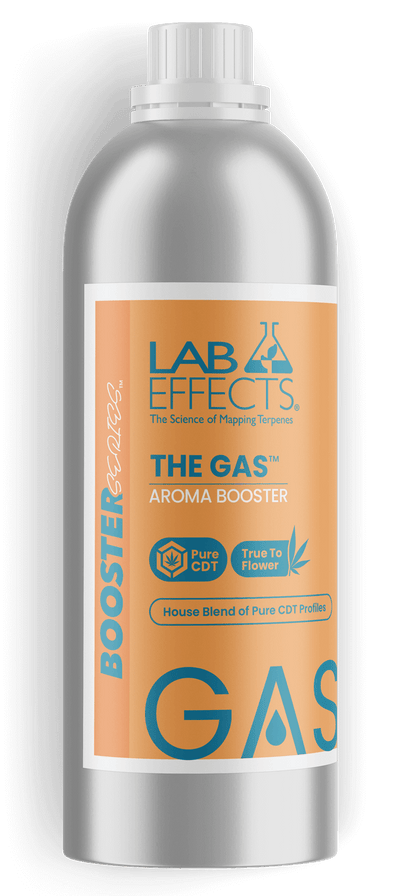
For more fuel on the nose, layer in The GAS™, our cannabis derived Aroma Booster.
How Does OG Kush Make You Feel?
Everybody reacts differently, but reports on OG Kush are consistent. It starts heady and euphoric, then settles into heavy body relaxation. People reach for it in the evening and to unwind. With THC in the twenties on some cuts, newer consumers should start slow.
OG Kush's Descendants
OG Kush is one of the most-used parents in modern cannabis. A few of its best-known crosses:
- Girl Scout Cookies: OG Kush crossed with Durban Poison, the cross that started the dessert family.
- Bruce Banner: Dark Horse Genetics' OG Kush crossed with Strawberry Diesel.
- Headband: OG Kush crossed with Sour Diesel on the West Coast.
- Pre-98 Bubba Kush: OG Kush crossed with the Florida Bubba.
Strains Similar to OG Kush
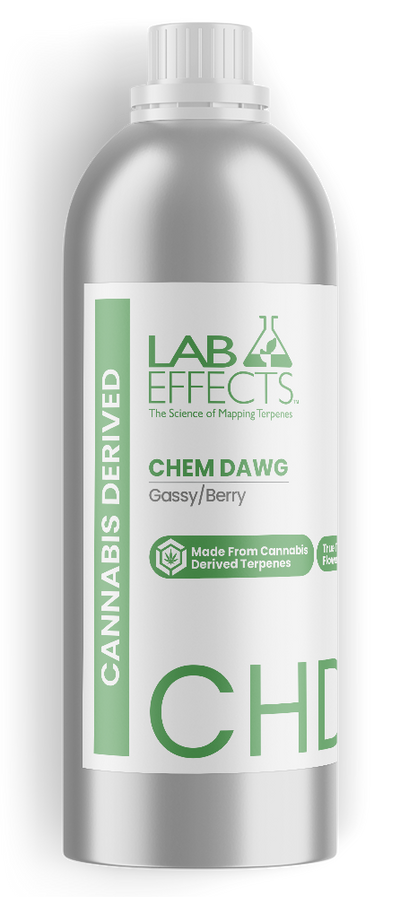
Chem Dawg
Lineage: Unknown, from the Chem 91 seeds of 1991
Flavor: Gassy, chemical and earthy
Available in: Cannabis Derived, Canna-Botanical, Botanical Derived
The most likely parent behind OG's fuel, and the root of the whole gas family.
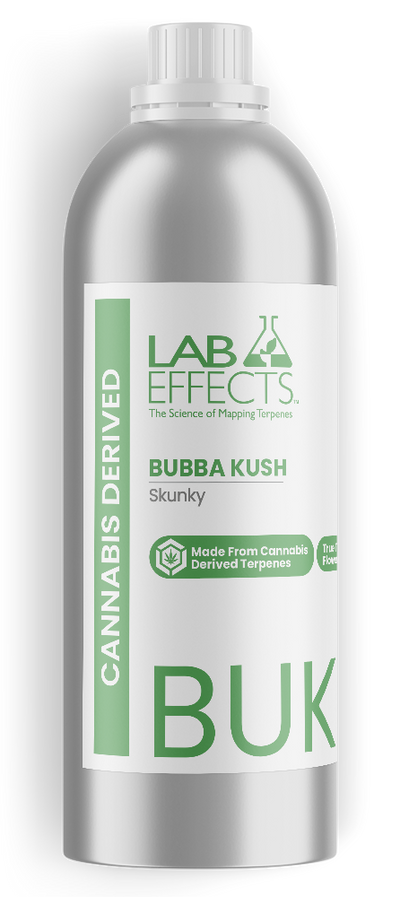
Bubba Kush
Lineage: OG Kush x Florida Bubba
Flavor: Earthy, hashy and sweet with coffee notes
Available in: Cannabis Derived, Canna-Botanical, Botanical Derived
Out of the same garden as OG, heavier and sweeter.
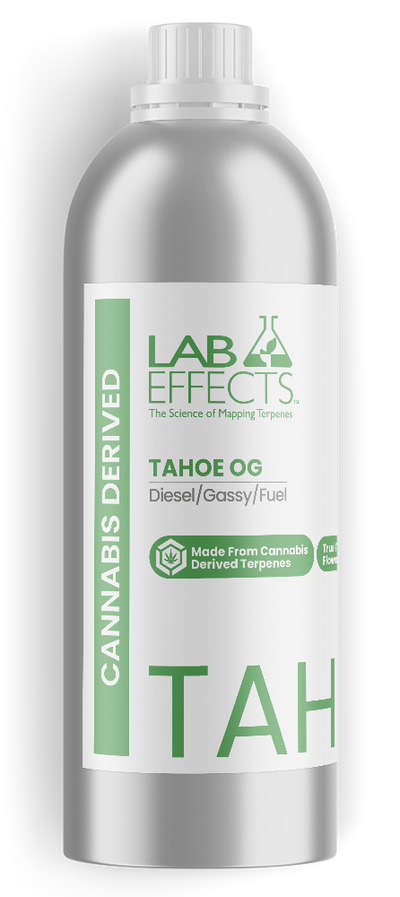
Tahoe OG
Lineage: OG Kush cut
Flavor: Lemon and pine over earthy diesel
Available in: Cannabis Derived, Canna-Botanical, Botanical Derived
One of the famous OG cuts, with more lemon and a heavier body.
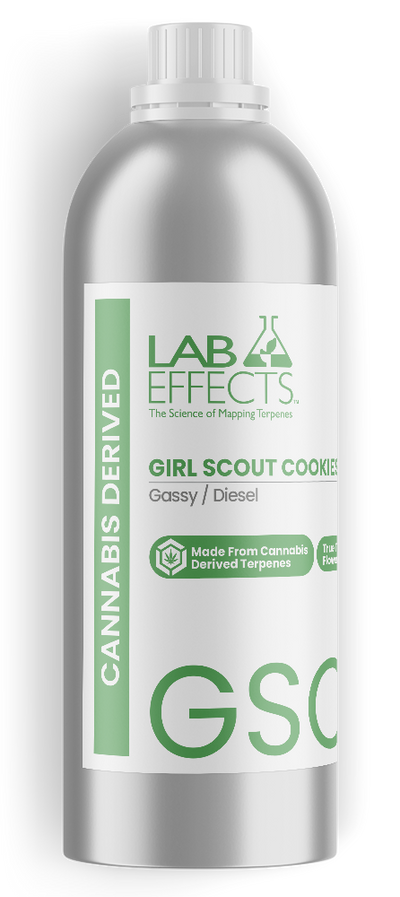
Girl Scout Cookies
Lineage: OG Kush x Durban Poison
Flavor: Sweet and earthy with a mint finish
Available in: Cannabis Derived, Canna-Botanical, Botanical Derived
OG's best-known cross, sweeter and the start of the dessert era.
Bruce Banner
Lineage: OG Kush x Strawberry Diesel
Flavor: Diesel and strawberry over pine
Available in: Cannabis Derived, Canna-Botanical
OG gas with a strawberry top, from Dark Horse Genetics in Denver.

Buy OG Kush Terpenes
OG Kush came west as one surviving cutting and became the gas profile the whole West Coast was built on.
Lab Effects' synthetic-free terpenes bring that profile to your whole lineup, from flower to vapes to concentrates. Everything is 100% natural and food grade, built True-to-Flower™ to match the real plant. Choose Cannabis Derived, Canna-Botanical or Botanical Derived, add The GAS™ for more fuel, or contact our team for a custom consultation.