Blue Dream Strain: Genetics, Terpene Profile, and Why It Became Everyone's Daily Driver
Audio unavailable right now. Please read on below.
STRAIN JAMSby Lab Effects
Saltwater Breeze
Audio unavailable right now.
An original song for Blue Dream. Hear every Strain Jam
Key takeaways
Ask a budtender in Denver, Portland, or Los Angeles to name one strain everybody has heard of, and Blue Dream comes up before you finish asking. In the years after legalization, it was one of the best-selling strains across Colorado, Washington, and Oregon, and it still shows up on menus in every legal state. That kind of staying power is not luck. Blue Dream is forgiving to grow, has a flavor that is easy to love and an effect that fits almost any time of day, and carries a terpene profile that is easy to recreate.
This guide covers where Blue Dream came from, what it smells and tastes like, which terpenes do the work, what people report feeling, and how formulators rebuild that profile in a vape, edible, or topical using Blue Dream terpenes.
Where Blue Dream came from
Blue Dream is a Blueberry x Haze cross that surfaced in the Santa Cruz, California, medical scene in the early 2000s. The Blueberry side is generally traced to DJ Short's Blueberry line, the sweet, fruit-forward indica that won the Cannabis Cup in 2000. The Haze side is the long-flowering sativa family with roots in Santa Cruz, and it gives Blue Dream its height, its lift, and its slightly spicy edge.
Nobody gets a clean breeding credit. Blue Dream circulated as a clone-only cut for years before seed versions appeared, and the person who made the original cross has never been confirmed, so treat any "bred by" claim as a story rather than a record. What is not in dispute is how fast it spread. By the mid-2010s, it was one of the top sellers in the legal markets on the West Coast and in Colorado, and it held that position for years.
What Blue Dream smells and tastes like
The nose is sweet blueberry up front, the kind that reads as fresh fruit rather than candy, sitting on a bed of pine and fresh-cut herb. There is a little pepper on the back end and a faint sandalwood note when the flower is cured well. On the inhale, it stays true to the nose: berry first, then a clean, almost sharp pine that keeps the sweetness from going flat. The exhale is earthy and a touch spicy.
That balance is the whole appeal. Blueberry strains on their own can be syrupy. Haze on its own can be harsh and incense-heavy. Blue Dream lands in the middle, which is why it works for people who do not usually like fruity strains and for people who find Haze too intense.
The Blue Dream terpene profile
Lab results on Blue Dream flower vary from grower to grower, but the same three terpenes lead almost every sample, with two more in support.
| Terpene | Role in Blue Dream | Also found in |
|---|---|---|
| Myrcene | The dominant terpene. Carries the sweet, ripe-fruit base and the earthy depth. | Mango, hops, lemongrass |
| Alpha-pinene | The pine. Cuts through the sweetness and gives the clean, bright top note. | Pine needles, rosemary |
| Beta-caryophyllene | The pepper on the exhale and the warm, spicy finish. | Black pepper, cloves |
| Humulene | Supporting. Dry, woody, hoppy edge that keeps the profile from reading as dessert. | Hops, sage |
| Limonene | Supporting. A little citrus lift behind the berry. | Citrus peel |
Myrcene plus pinene is the signature. A lot of fruity strains are myrcene-heavy; what makes Blue Dream recognizable is how much pinene rides alongside it. If you are blending from isolates, that ratio is where you spend your time. Our Myrcene and Alpha Pinene isolates are the two to start with.

What people report feeling
Blue Dream is usually labeled a sativa-dominant hybrid, and the way people describe it matches that label. The common report is a clear, upbeat head effect with a relaxed body underneath, without the heavy, sit-down feeling of a true indica or the racy edge some Hazes bring. That middle ground is why it became a "daily driver" strain: people reach for it in the afternoon, before a hike, or when they want to stay social.
Terpenes shape how a strain feels, not just how it tastes. Myrcene is widely associated with the relaxed, easy body feel. Pinene is the terpene people point to for alertness and a clear head. Caryophyllene is the one that interacts with the body's CB2 receptors directly, and it is often credited with the calm, grounded quality. Put those three together and you get a profile that stays balanced, which is exactly how Blue Dream reads.
Effects vary by person, dose, and the rest of the formulation, but this is the pattern people report, and it is consistent enough to plan a product around.

Blue Dream, Blueberry Dream, and Blue Dream Haze: same thing?
Mostly. "Blueberry Dream" is the name some growers and shops use for the same Blueberry x Haze cut, and "Blue Dream Haze" shows up on seed listings that lean harder into the Haze parent. There are also distinct Blue Dream phenotypes in circulation: a more indica-leaning cut with heavier berry and a sativa-leaning cut with more pine and a longer flowering time. If a menu lists two Blue Dreams that smell different, that is usually why.
For terpene work, the profile above describes the classic, widely tested Blue Dream. That is the one customers recognize by name.
Recreating Blue Dream in a product
Blue Dream is one of the easiest strain profiles to formulate with, for the same reason it is easy to smoke: it is balanced and it is familiar. A few starting points from our formulation guide:
Vape cartridges and disposables: start around 7 percent by weight in distillate and adjust to taste. Blue Dream holds its berry-and-pine character well under heat, and the pinene keeps it from tasting flat in a cart.
Tinctures: about 1.5 percent in a carrier oil. The myrcene base carries nicely.
Gummies and edibles: about 1 percent of the finished mass. The fruit-forward profile pairs well with berry flavors.
Topicals: around 0.5 percent. The pine and pepper notes read as fresh rather than medicinal.
Those are starting points, not recipes. Every base, every hardware setup, and every customer palate is a little different, so sample first.

We offer Blue Dream terpenes three ways, and the choice comes down to budget and label claims:
Cannabis-Derived Terpenes (CDT): extracted from actual Blue Dream flower. The most authentic nose, and the one to use when the label says cannabis-derived.
Canna-Botanical Strains (CBS): a blend of cannabis-derived and botanical terpenes matched to the Blue Dream profile. Most of the character of CDT at a lower cost per liter.
Botanical-Derived Terpenes (BDT): the full profile rebuilt from plant-sourced isolates. Consistent batch to batch, no cannabis content, and the most economical option for large runs.
All three contain no THC, CBD, or other cannabinoids. They are terpenes only. If you want to try them before committing to a size, our sample kits are the easiest way to do it.
Blue Dream's family
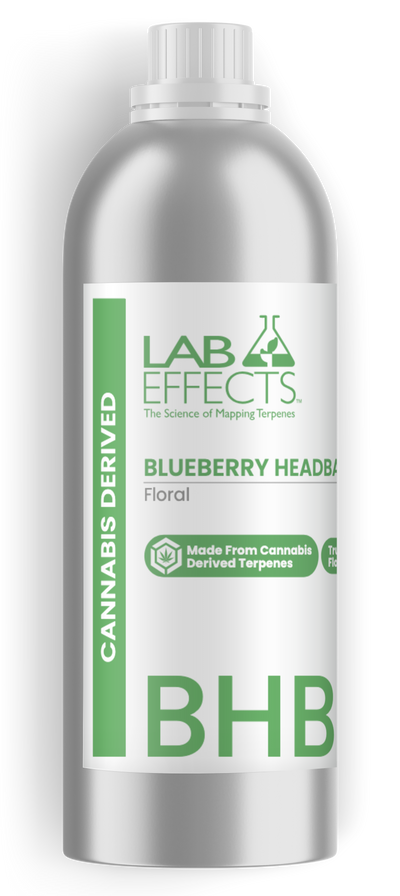
Blue Dream has been used as a parent in a long list of modern crosses, often to bring sweetness and vigor to a harsher sativa line. If you like the berry side of the profile, Blueberry Headband is worth knowing too. It comes off the same Blueberry branch of the family and carries that berry base with a heavier, fuel-leaning finish. Browse the full cannabis-derived strains collection to see what else is out there.
Frequently asked questions
Is Blue Dream a sativa or an indica? It is a hybrid, usually described as sativa-dominant. The Haze parent gives it the uplifting side, and the Blueberry parent gives it the relaxed body. Most people report it as balanced rather than strongly one way or the other.
What terpenes are in Blue Dream? Myrcene leads, followed by alpha-pinene and beta-caryophyllene, with humulene and limonene in supporting roles. Myrcene with a strong pinene presence is the signature.
Does Blue Dream taste like blueberries? Yes, but not like blueberry candy. The berry is fresh and sweet, backed by pine and a little pepper. It is one of the more recognizable flavors in cannabis, which is part of why it sells.
Do Blue Dream terpenes contain THC? No. Terpenes are aroma and flavor compounds. Lab Effects' Blue Dream terpenes, whether cannabis-derived, canna-botanical, or botanical-derived, contain no THC, CBD, or other cannabinoids.
What is the difference between Blue Dream and Blueberry Dream? In most cases, they are the same Blueberry x Haze cut sold under a different name. A few seed banks use Blueberry Dream for a distinct cross, so check the listed genetics if it matters for your product.